
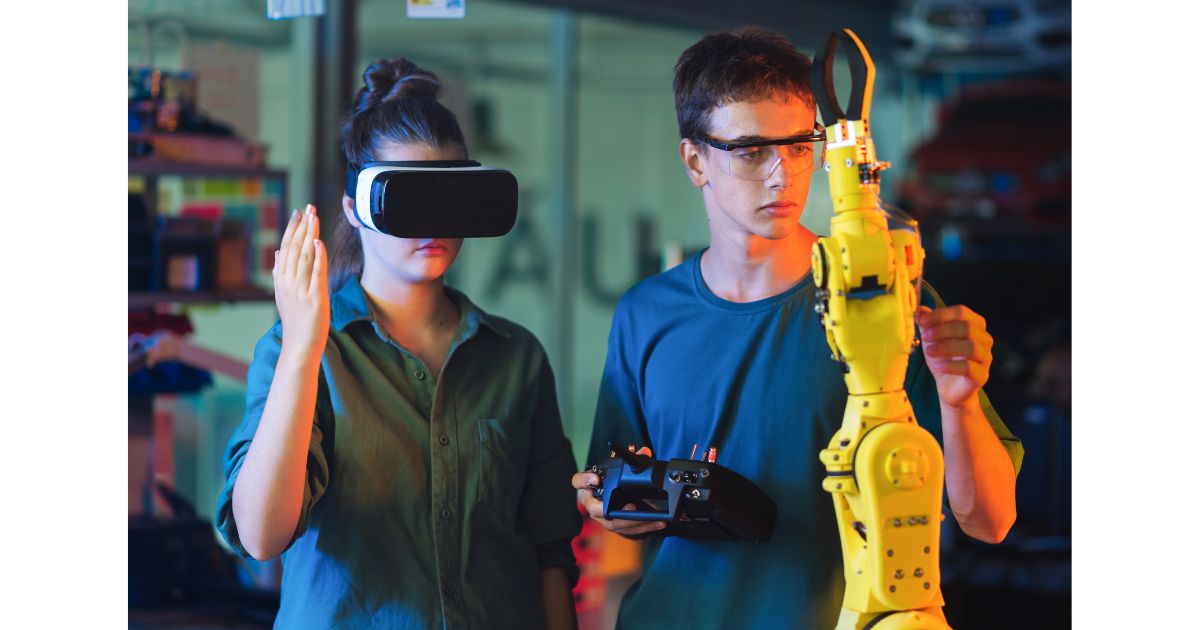
Introduction: The Rapid Evolution of AI and Automation in 2026
Artificial Intelligence (AI) and automation have moved far beyond experimental technologies. In 2026, they are deeply embedded in everyday life, transforming industries, reshaping jobs, and redefining how businesses operate. From intelligent virtual assistants to fully automated production systems, the world is witnessing a major shift toward smarter, faster, and more efficient digital ecosystems.
The latest technology trends in AI and automation are not only improving productivity but also creating entirely new opportunities for innovation. As organizations continue to adopt these technologies at scale, understanding the key trends of 2026 becomes essential for staying competitive in a rapidly changing digital world.
1. Generative AI Becoming a Core Business Tool
One of the most significant trends in 2026 is the widespread adoption of generative AI across industries. These systems can create text, images, videos, code, and even business strategies with minimal human input.
Businesses are using generative AI for:
- Automated content creation for marketing and branding
- Product design and prototyping
- Software development assistance
- Customer communication and support
Unlike earlier versions, modern generative AI models are more accurate, context-aware, and capable of understanding complex instructions. This makes them essential tools for boosting productivity and creativity in nearly every sector.
2. Hyper-Automation Across Industries
Hyper-automation is another leading trend in 2026, combining AI, machine learning, robotic process automation (RPA), and advanced analytics to automate entire business processes.
Instead of automating single tasks, organizations are now automating complete workflows such as:
- Supply chain management
- Financial operations
- Human resource onboarding
- Customer service pipelines
This shift is helping companies reduce operational costs, minimize human error, and significantly improve efficiency. Hyper-automation is especially impactful in industries like banking, healthcare, logistics, and manufacturing.
3. AI-Powered Decision-Making Systems
In 2026, AI is no longer just a support tool—it is becoming a decision-making partner. AI-powered analytics platforms can now process massive amounts of real-time data and provide actionable insights instantly.
These systems are widely used for:
- Predicting market trends
- Managing financial risks
- Optimizing business strategies
- Enhancing customer experience personalization
With improved accuracy and transparency, AI decision-making systems are helping businesses make faster and more informed choices than ever before.
4. Rise of Autonomous AI Agents
A major breakthrough in 2026 is the development of autonomous AI agents. These are intelligent systems capable of performing complex tasks independently without constant human supervision.
Examples include:
- AI customer service agents handling complete conversations
- Digital assistants managing schedules, emails, and workflows
- Autonomous research agents gathering and analyzing data
These agents are evolving into digital workers that can collaborate with humans or even operate independently in certain environments. This is redefining traditional workforce structures.
5. AI Integration in Robotics and Smart Automation
Robotics combined with AI is transforming industries such as manufacturing, healthcare, and agriculture. Smart robots are now more adaptable, learning-based, and capable of working in unpredictable environments.
Key developments include:
- Self-learning industrial robots in factories
- AI-driven surgical robots in healthcare
- Agricultural robots for precision farming
These advancements are making operations faster, safer, and more cost-effective while reducing the need for repetitive human labor.
6. Edge AI for Real-Time Processing
Edge AI is becoming a critical trend in 2026 as more devices require real-time decision-making without relying on cloud computing.
With edge AI, data is processed directly on devices such as:
- Smartphones
- IoT sensors
- Autonomous vehicles
- Smart home systems
This reduces latency, improves speed, and enhances data privacy. Industries like healthcare and transportation are benefiting greatly from faster, localized AI processing.
7. AI in Cybersecurity and Threat Detection
As digital systems become more complex, cybersecurity threats are also increasing. In response, AI-driven security systems are becoming essential in 2026.
These systems can:
- Detect unusual behavior in real time
- Predict potential cyberattacks
- Automatically respond to security threats
- Strengthen data protection protocols
AI-powered cybersecurity is significantly improving defense mechanisms against increasingly sophisticated digital attacks.
8. Human-AI Collaboration in the Workplace
Instead of replacing humans, AI in 2026 is increasingly focused on collaboration. Human-AI teamwork is becoming the standard in modern workplaces.
Employees now work alongside AI tools that assist with:
- Data analysis and reporting
- Creative brainstorming
- Project management
- Customer engagement
This collaboration enhances productivity while allowing humans to focus on strategic, creative, and emotional aspects of work that AI cannot fully replicate.
9. Personalized AI Experiences for Consumers
Consumer technology is also evolving rapidly, with AI delivering highly personalized experiences. From entertainment platforms to online shopping, AI systems are tailoring content and recommendations based on individual behavior and preferences.
This includes:
- Personalized learning systems in education
- Customized healthcare recommendations
- AI-curated entertainment content
- Smart shopping assistants
Personalization is becoming a key driver of user satisfaction and engagement in digital platforms.
10. Ethical AI and Responsible Automation
As AI becomes more powerful, ethical considerations are gaining importance. In 2026, there is a strong focus on developing responsible AI systems that are transparent, fair, and unbiased.
Key areas of focus include:
- Reducing algorithmic bias
- Ensuring data privacy
- Improving AI transparency
- Establishing global AI governance standards
Organizations are increasingly adopting ethical frameworks to ensure that AI benefits society as a whole without causing harm.
Conclusion: The Future Powered by Intelligent Automation
The latest technology trends in 2026 clearly show that Artificial Intelligence and automation are no longer optional—they are essential components of modern life and business. From autonomous agents and hyper-automation to ethical AI and real-time edge computing, these innovations are reshaping the world at an unprecedented pace.
As AI continues to evolve, the future will be defined by intelligent systems that not only perform tasks but also think, learn, and collaborate with humans. Organizations and individuals who embrace these changes will be best positioned to thrive in the next era of digital transformation.